Monica Hsieh
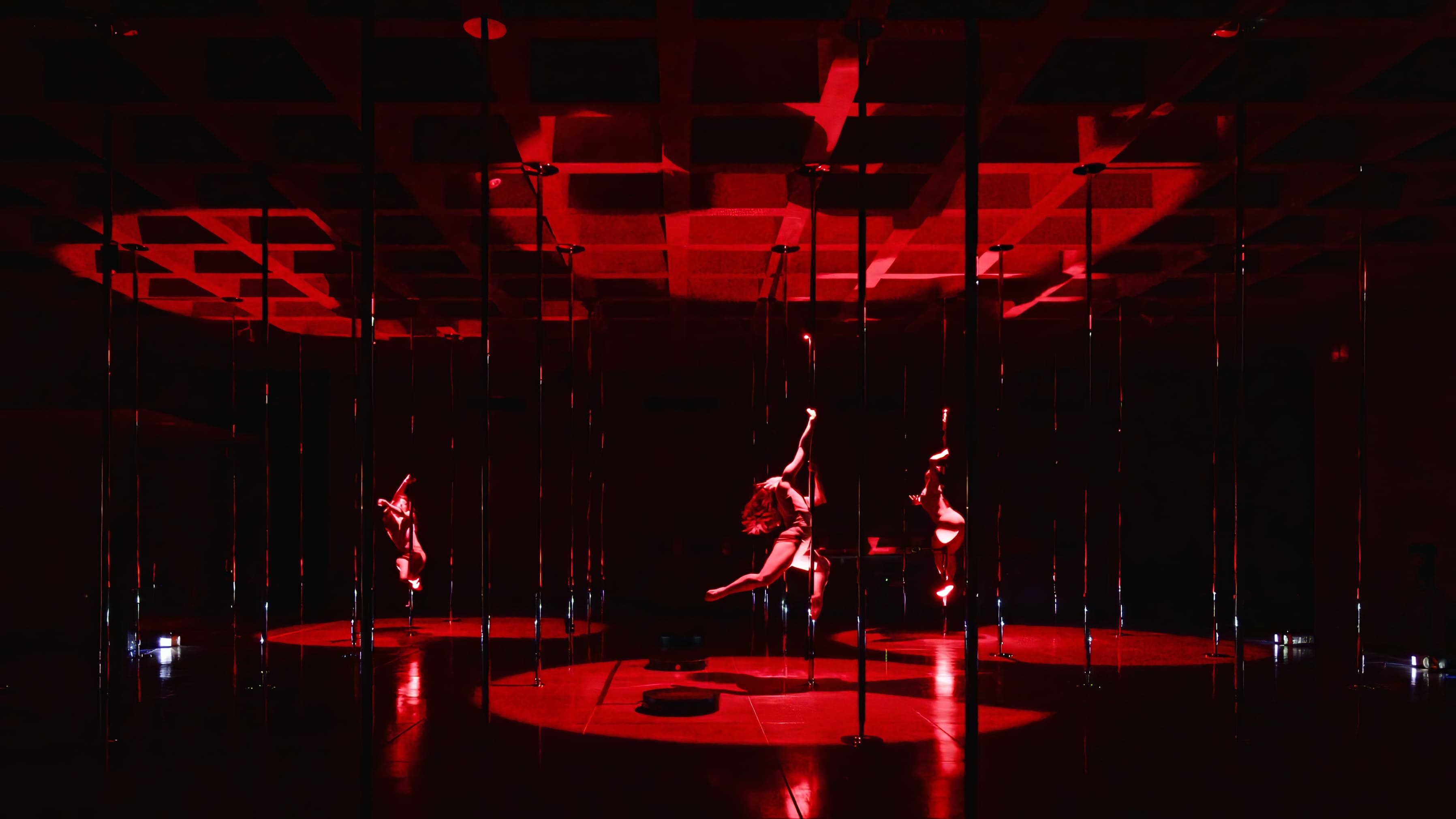
OUROBOROS
Scenography
Scenography for a Pole Dance Performance
Ouroboros is an immersive performance that blends architectural installation, interactive media, and contemporary pole dance, unfolding across seven chapters that explore cycles of trauma, healing, and resilience. My contributions included preparing visual materials, assisting with rehearsals, and supporting the development of installation components and performance materials.
-
2025
-
Professional Project
-
Scenography
-
Everson Museum, Syracuse, NY
-
Erin Cuevas
Spatial Arrangement and Audience Integration
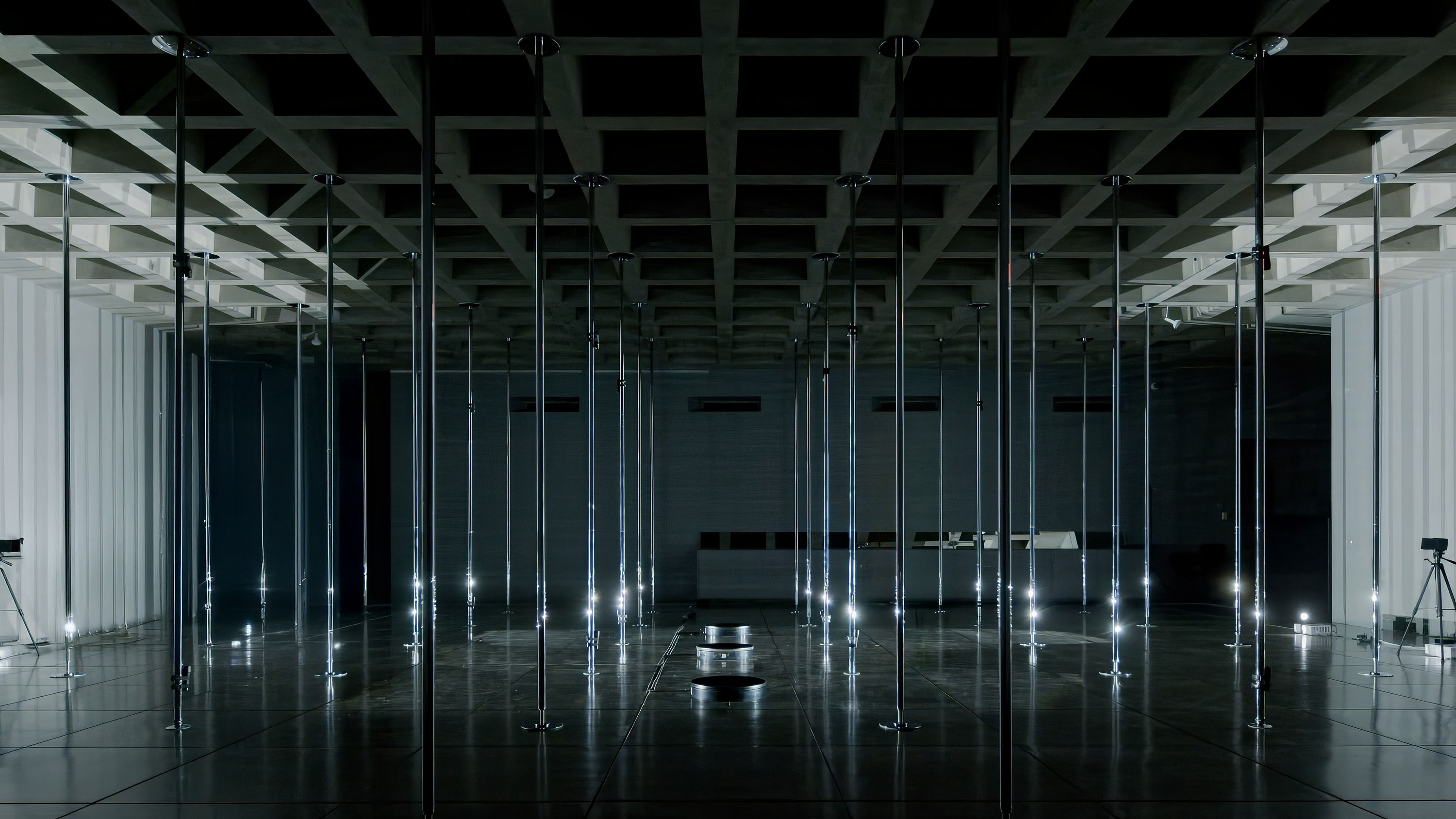
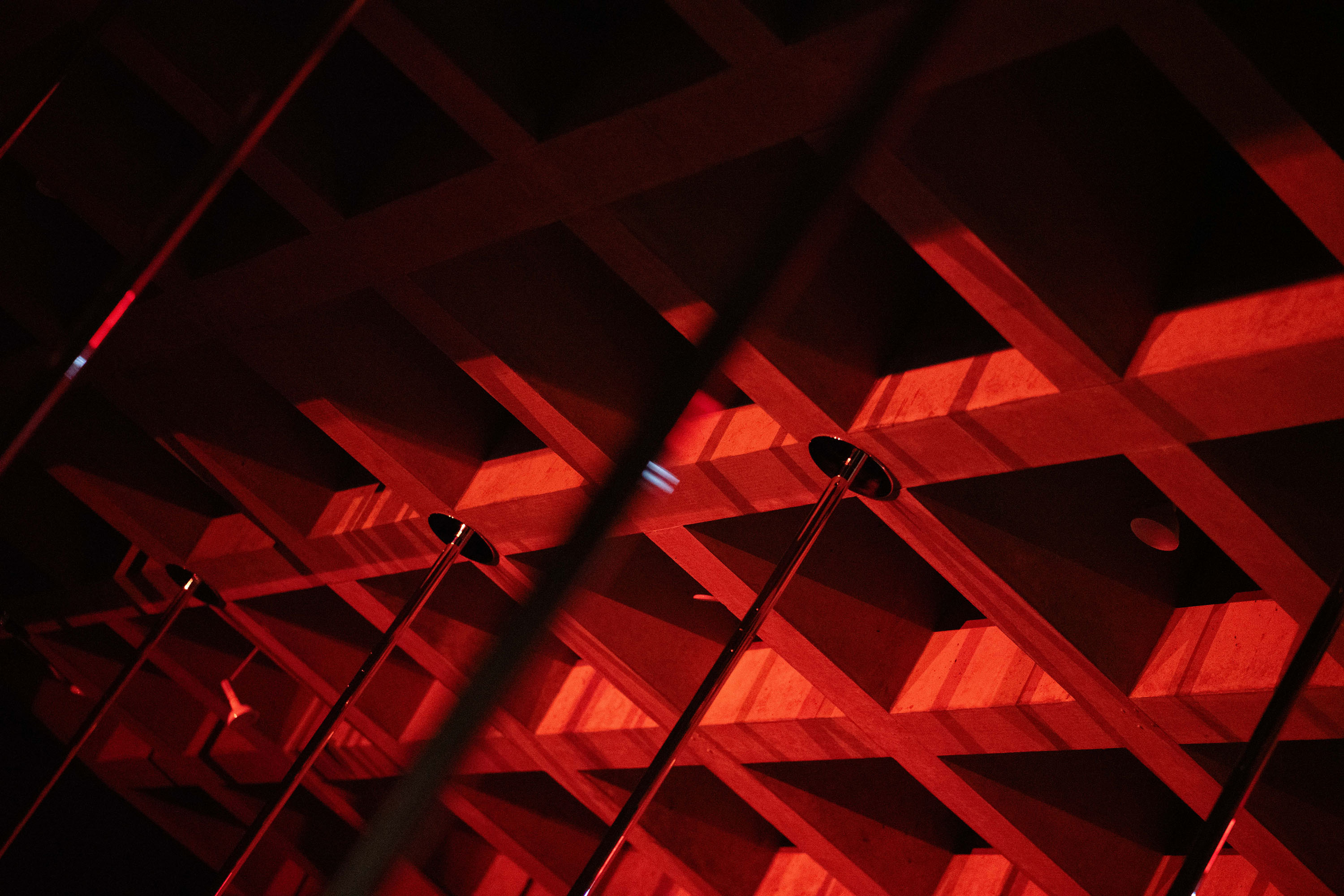
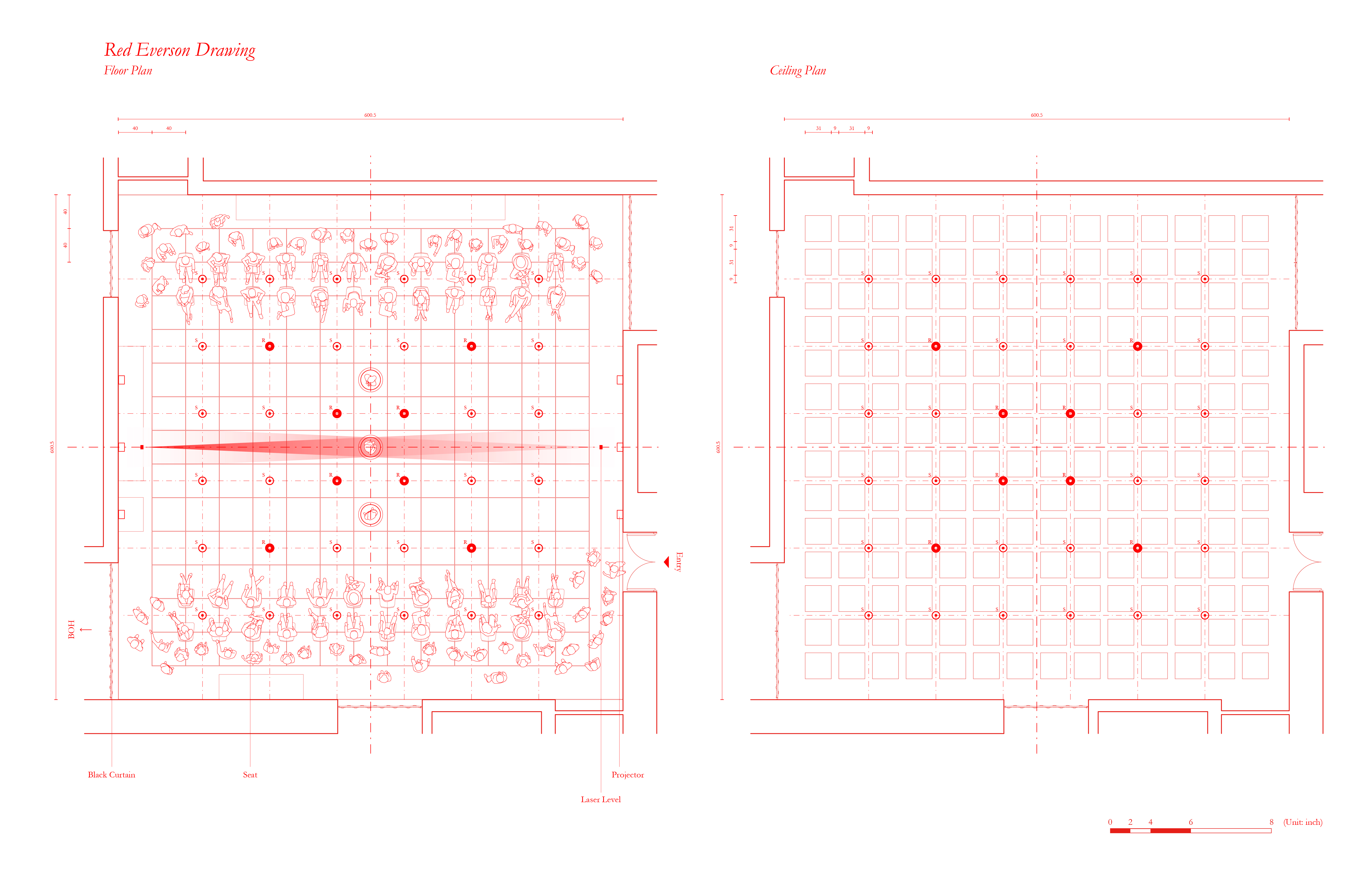
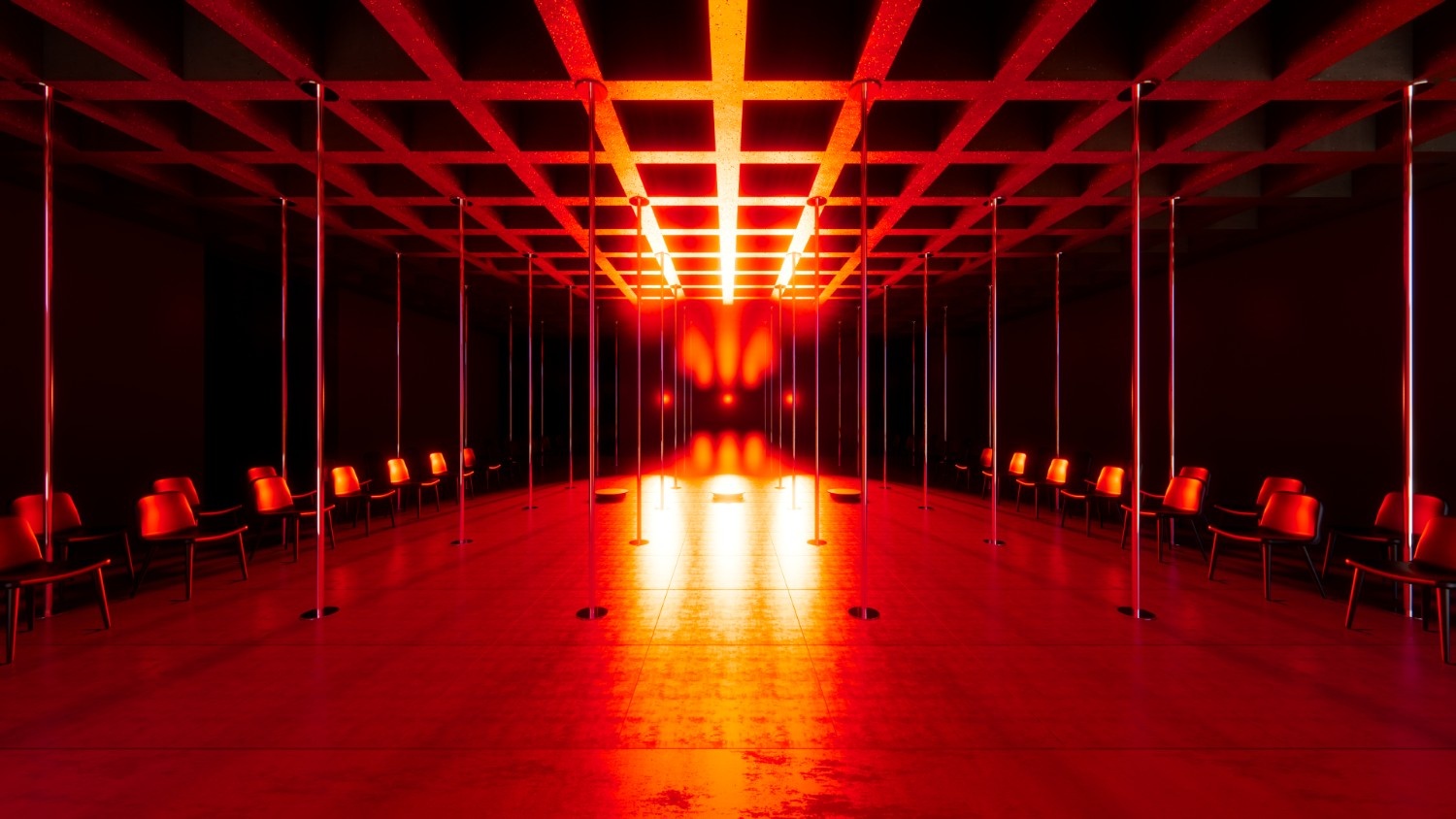
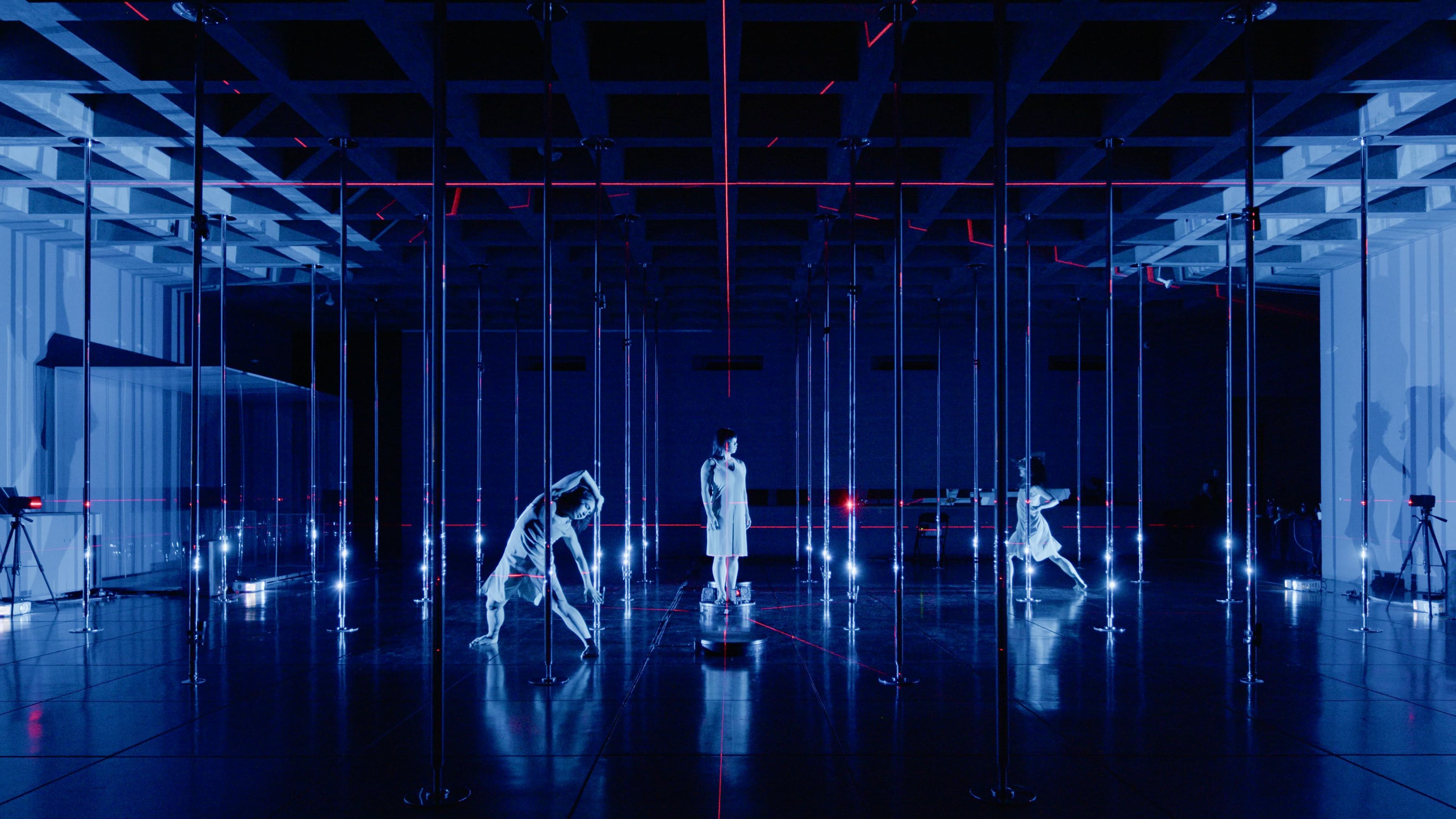
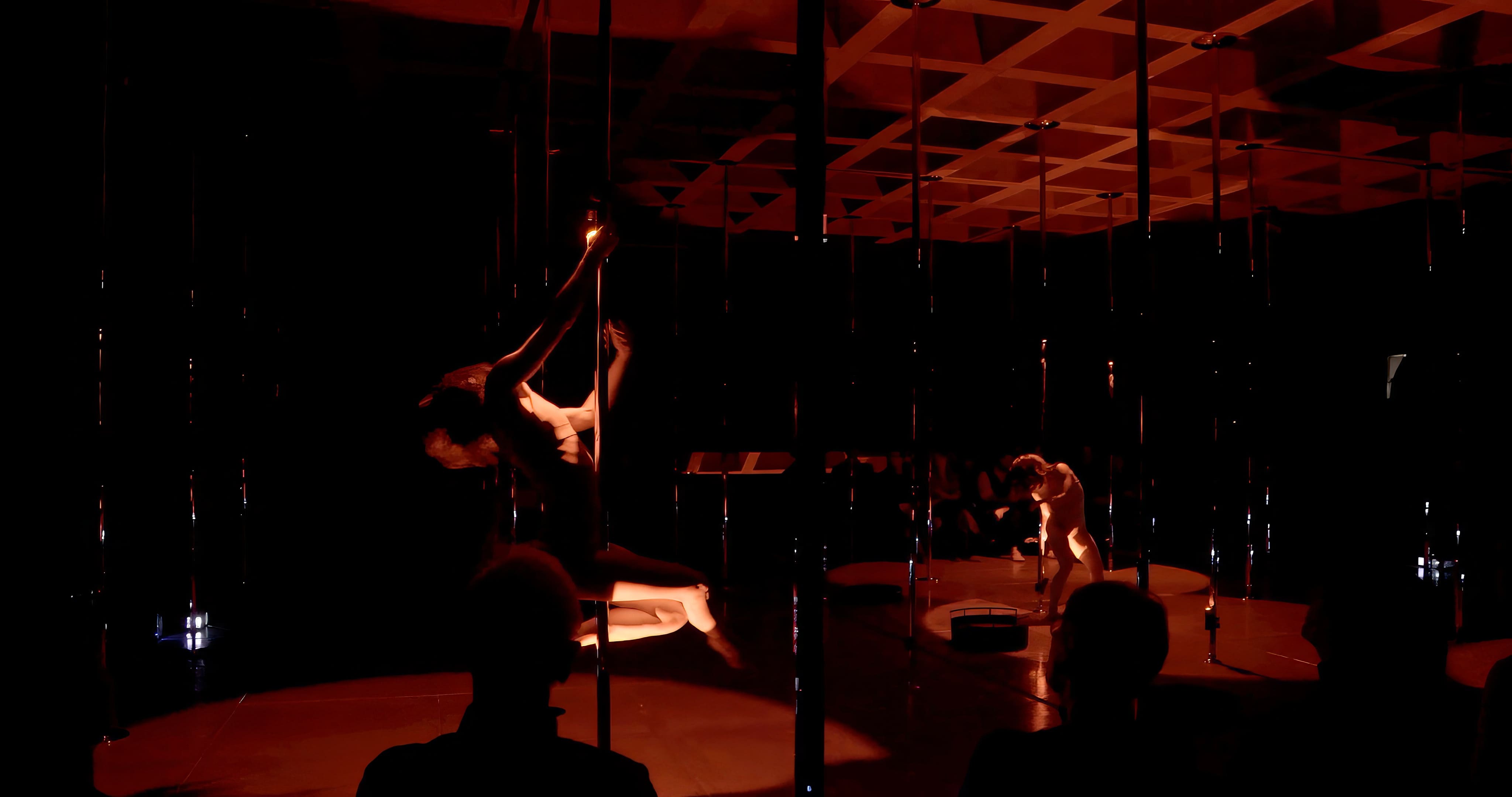
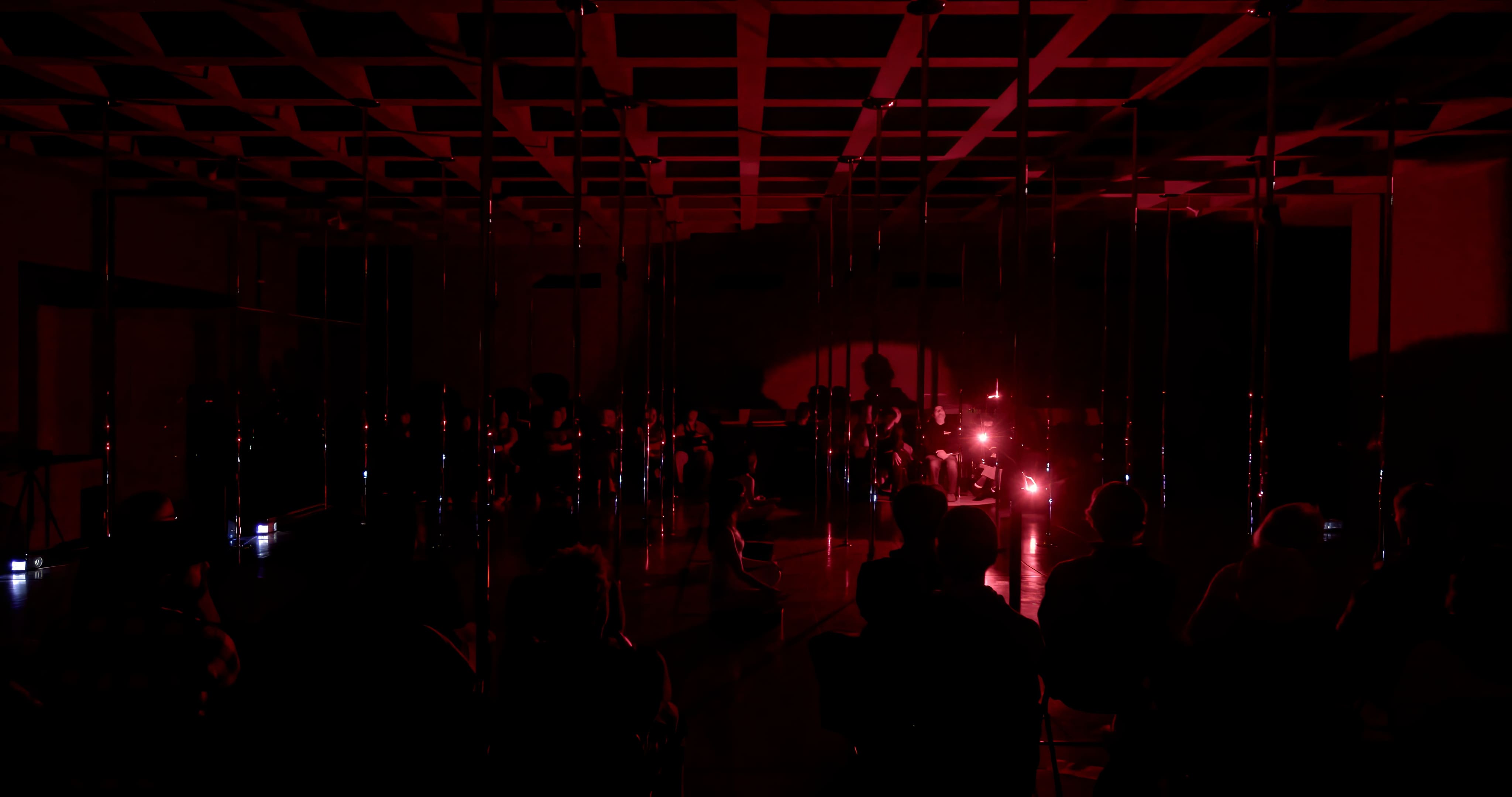
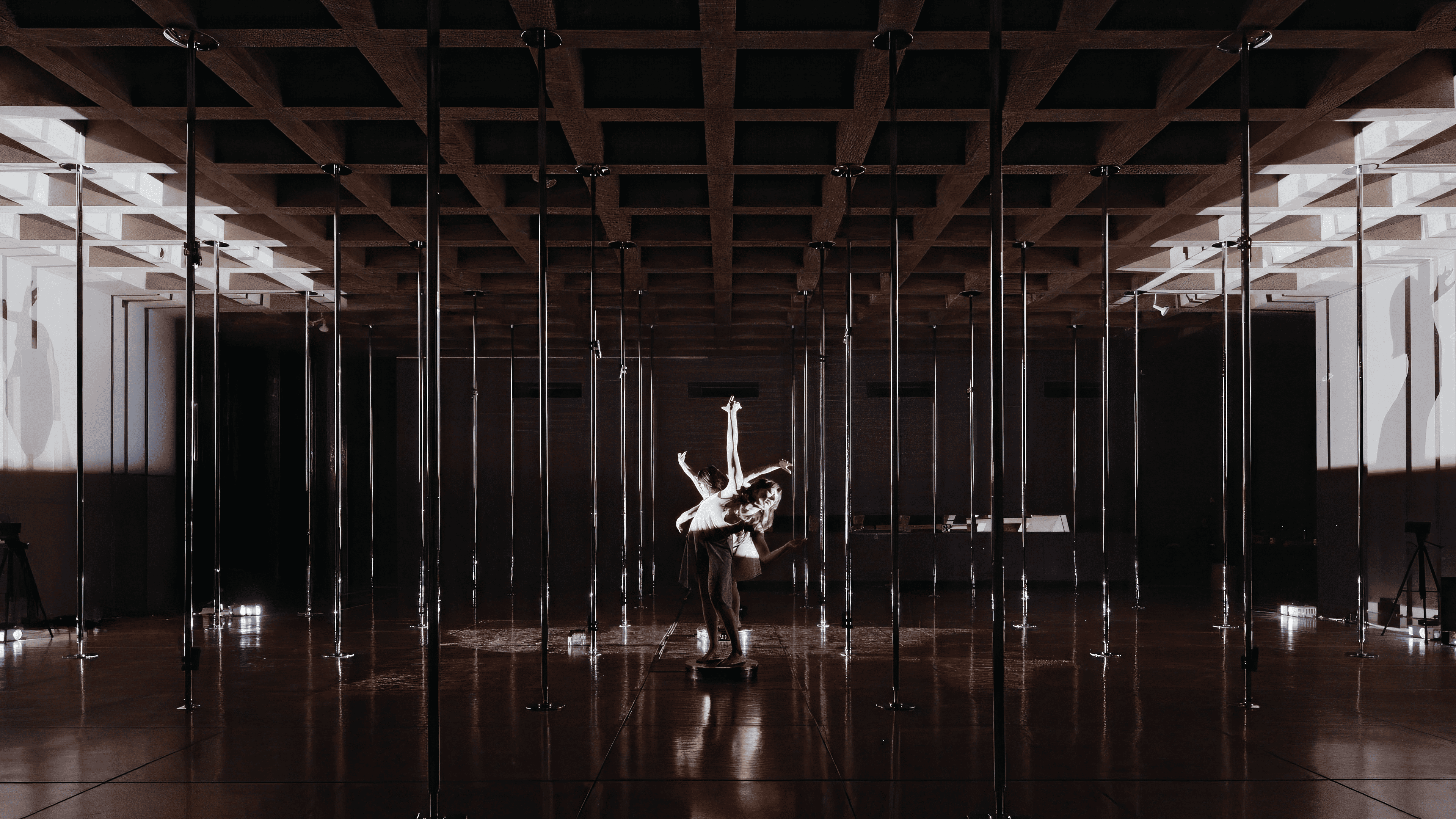
The installation is situated within the Everson Museum of Art, designed by I. M. Pei. The gallery is structured by a strict forty-inch grid, which serves as the spatial framework for the project. Within this system, thirty-six steel poles are arranged in a six-by-six configuration to support the performance. Two rows extend into the audience area, creating a more immersive and physically connected relationship between dancers and viewers.
Performance Overview
This video presents the overall performance, highlighting the spatial atmosphere and lighting transitions across all seven chapters.
Chapter 01: Pulse
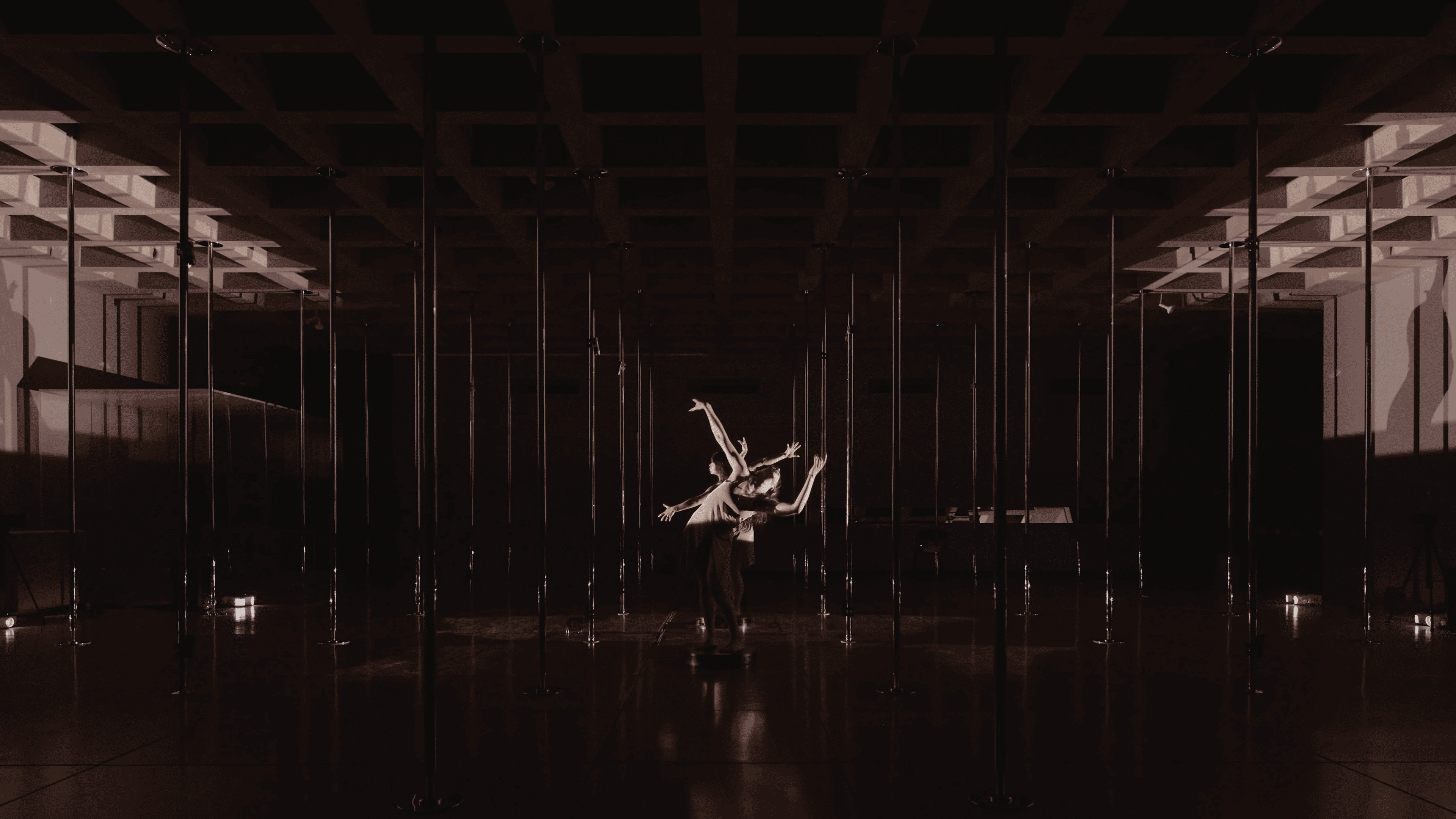
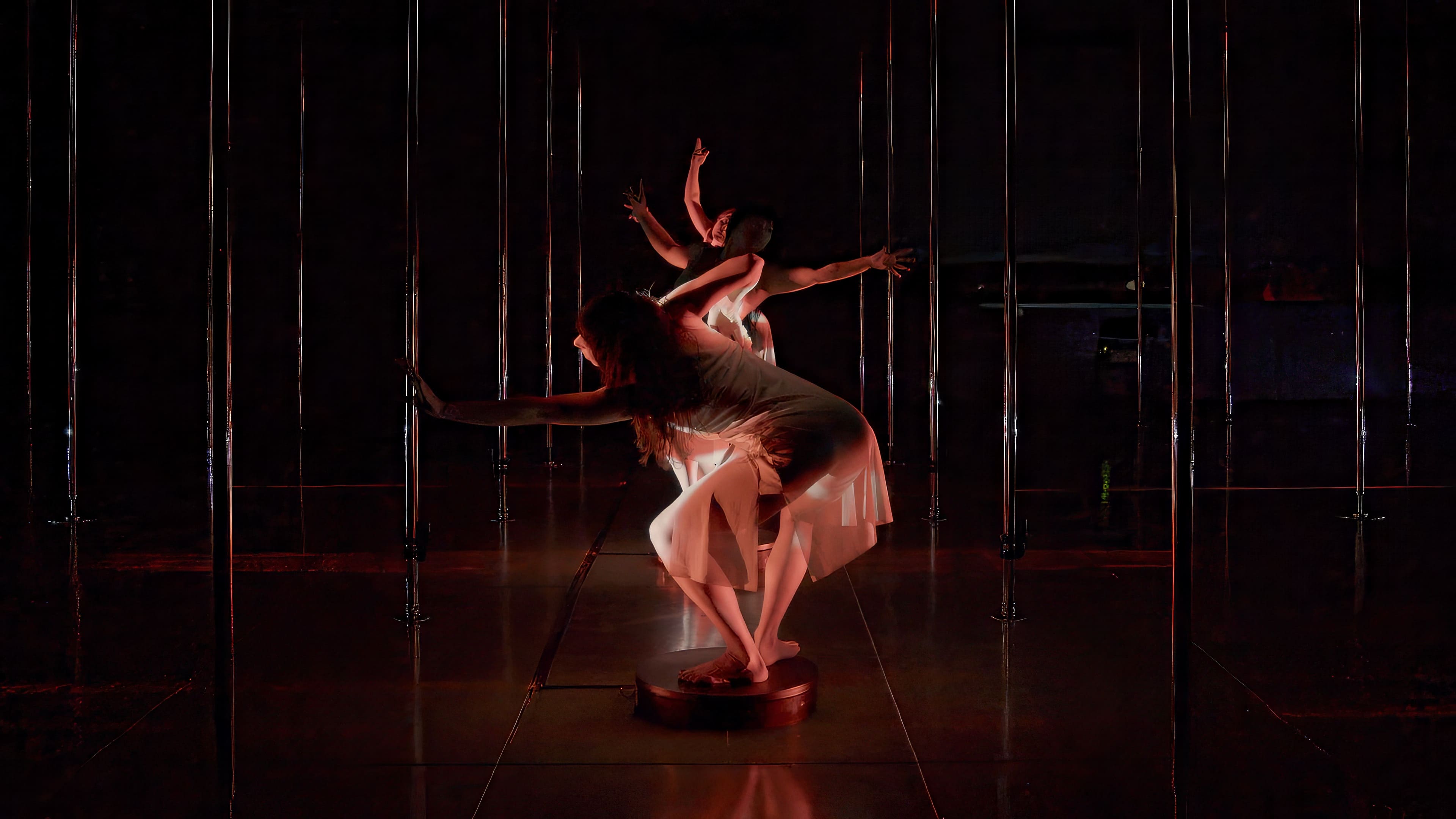
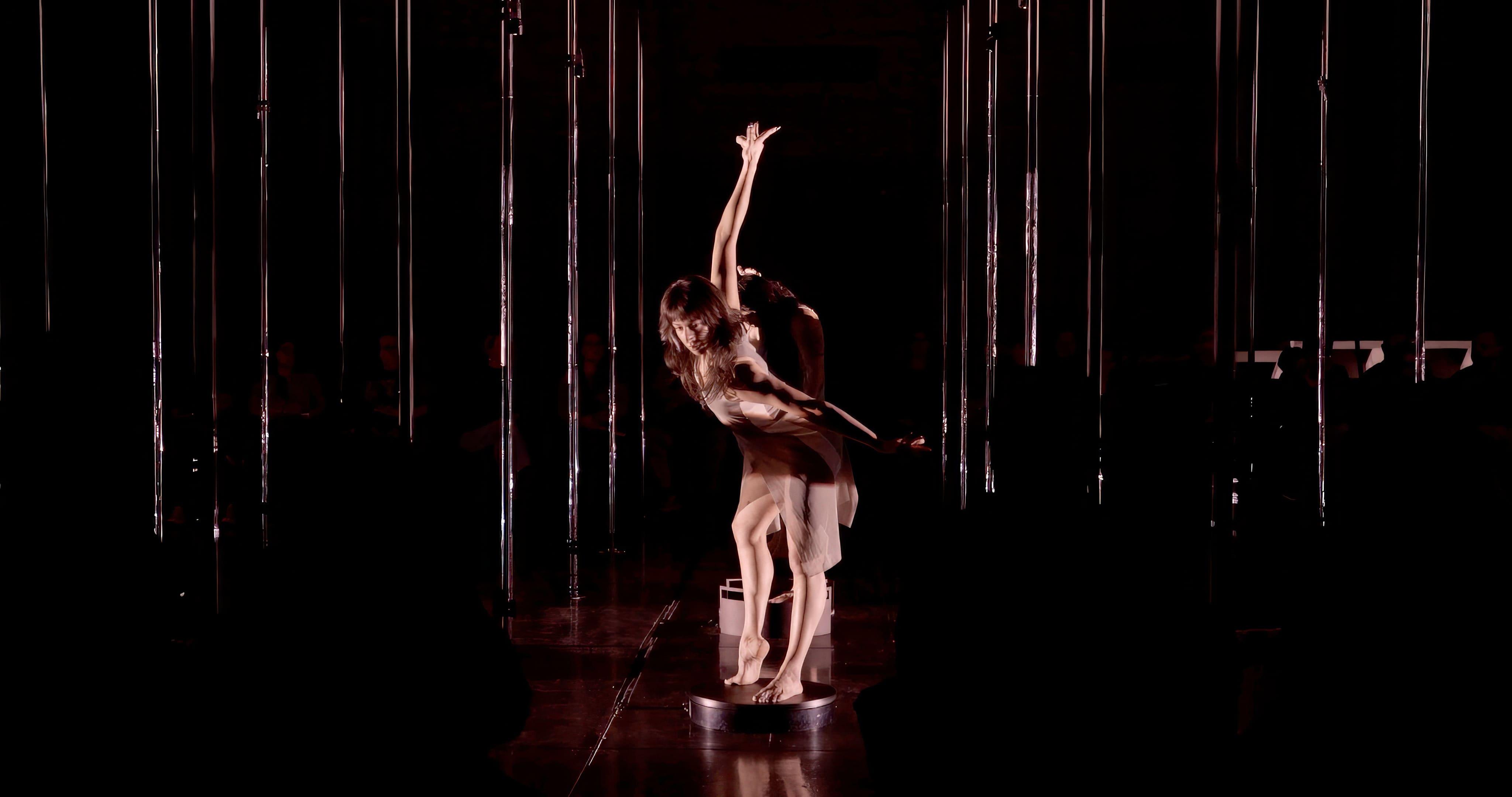
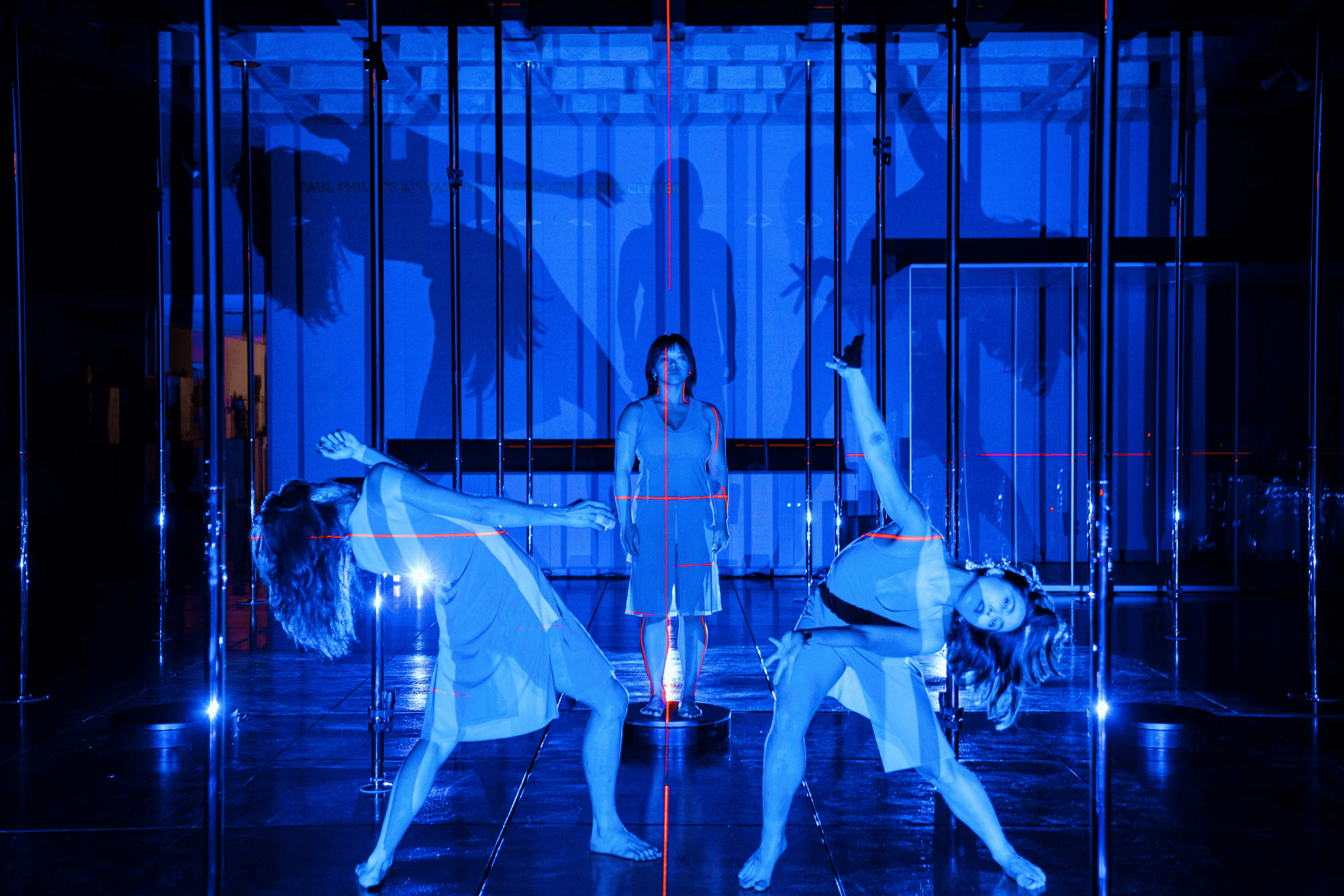
The first chapter introduces three dancers positioned on rotating turntables. Their names are projected onto their bodies, synchronized with a heartbeat rhythm. The scene establishes a calm and controlled beginning, presenting the body as the central focus of the narrative.
Chapter 02: Diagnosis
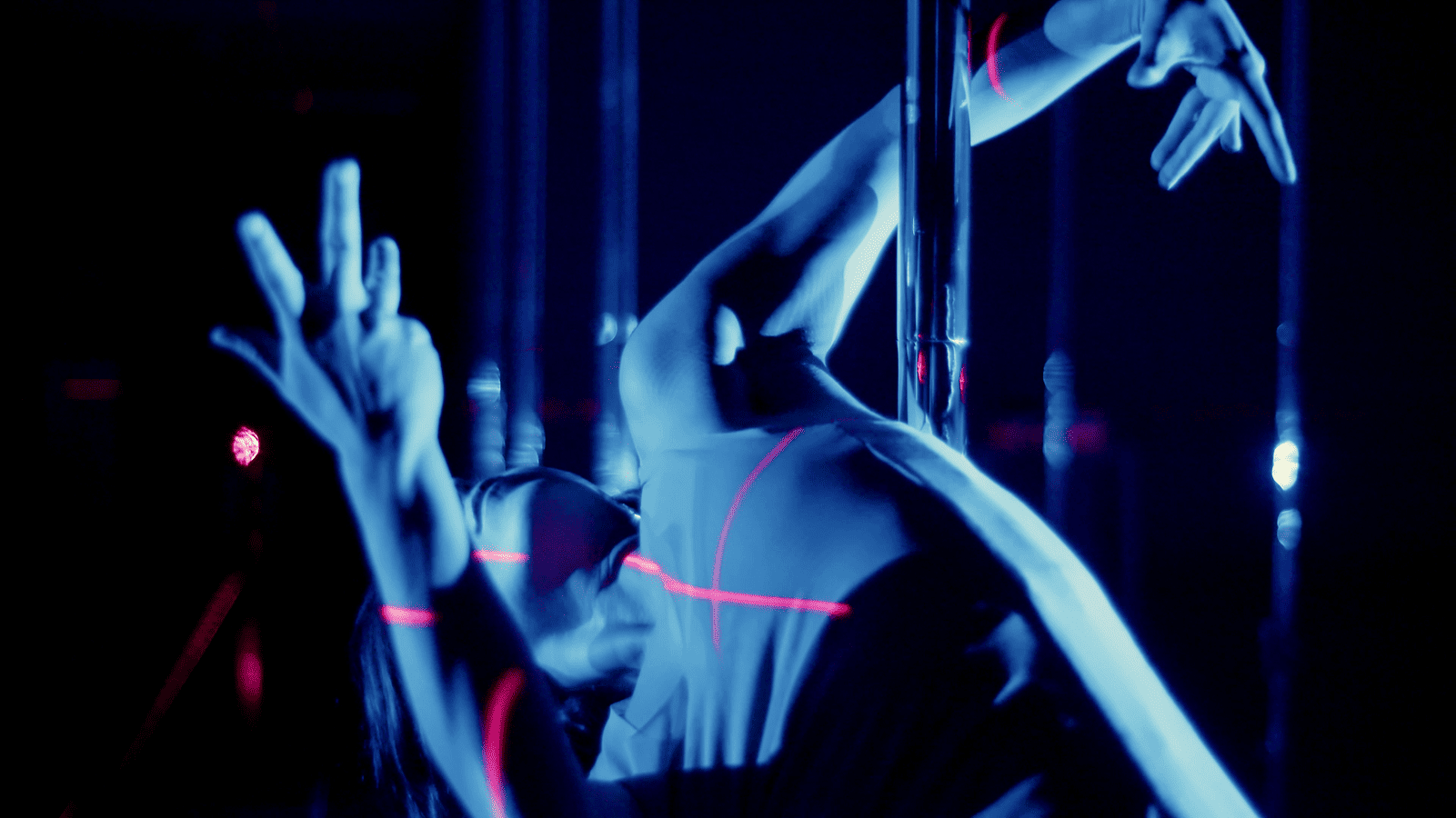
Laser levels are used to project vertical and horizontal lines across the space. A rotating laser scans from the center, creating a clinical and precise atmosphere, reminiscent of a medical examination.
Chapter 03: Treatment
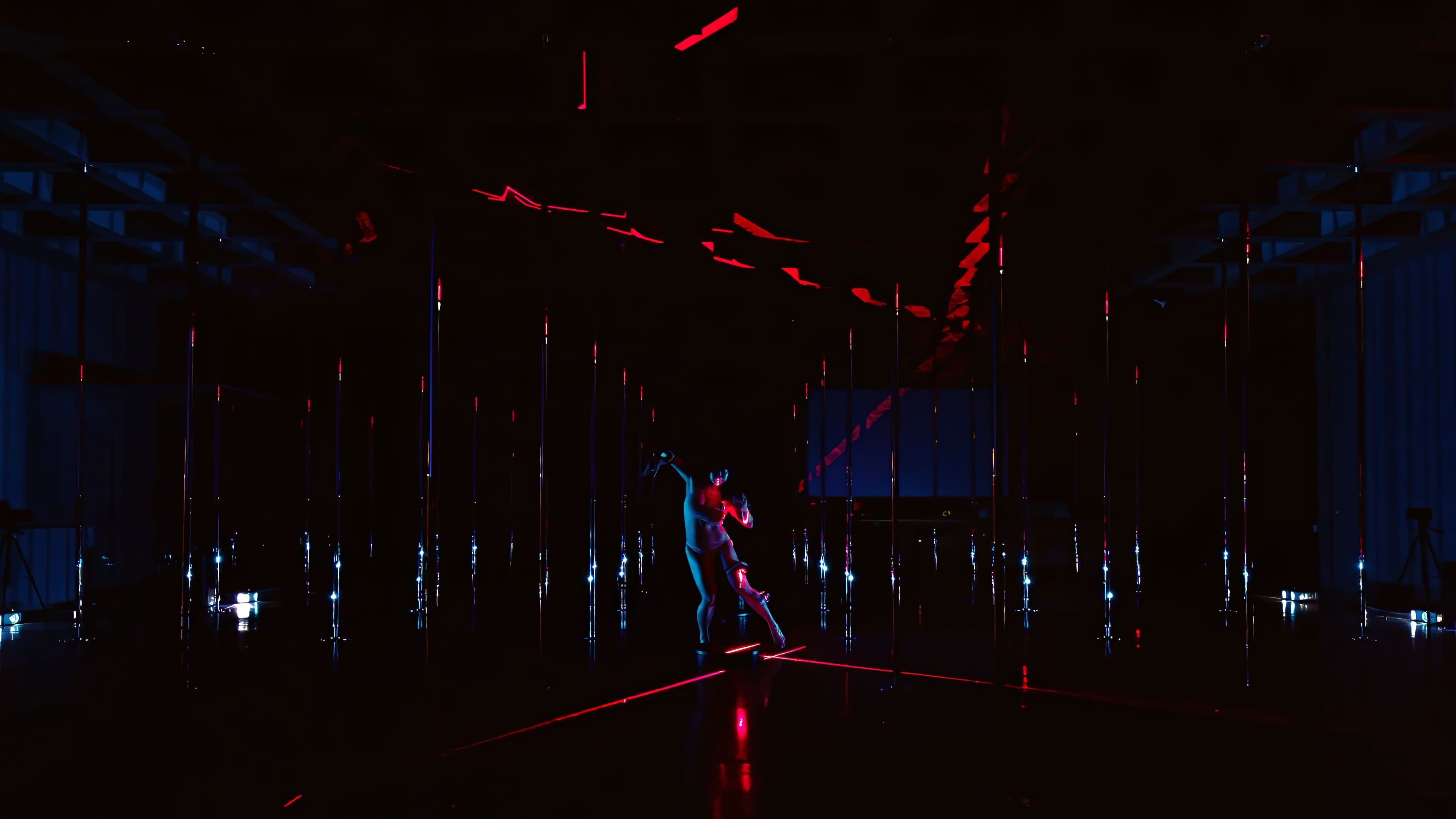
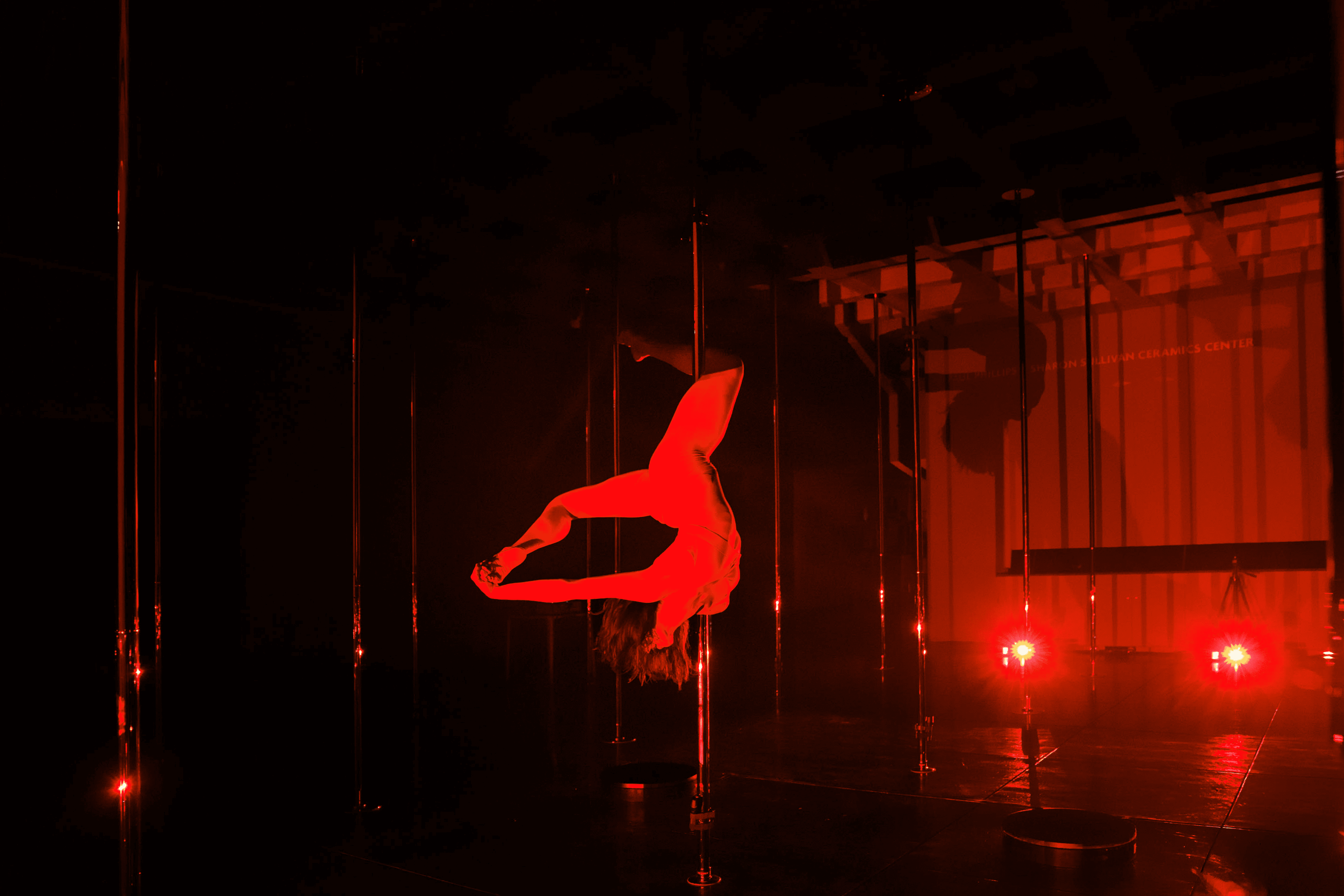
Flashlights are introduced above and below the dancers. Rather than viewing the body directly, the movement is perceived through shadows cast onto the ceiling and floor, creating a new way of experiencing motion.
Chapter 04: Catharsis
Multiple projectors flash at high frequency, transforming movement into fragmented frames rather than continuous motion. Strong contrasts in color and light intensify the scene.
Chapter 05: Recovery
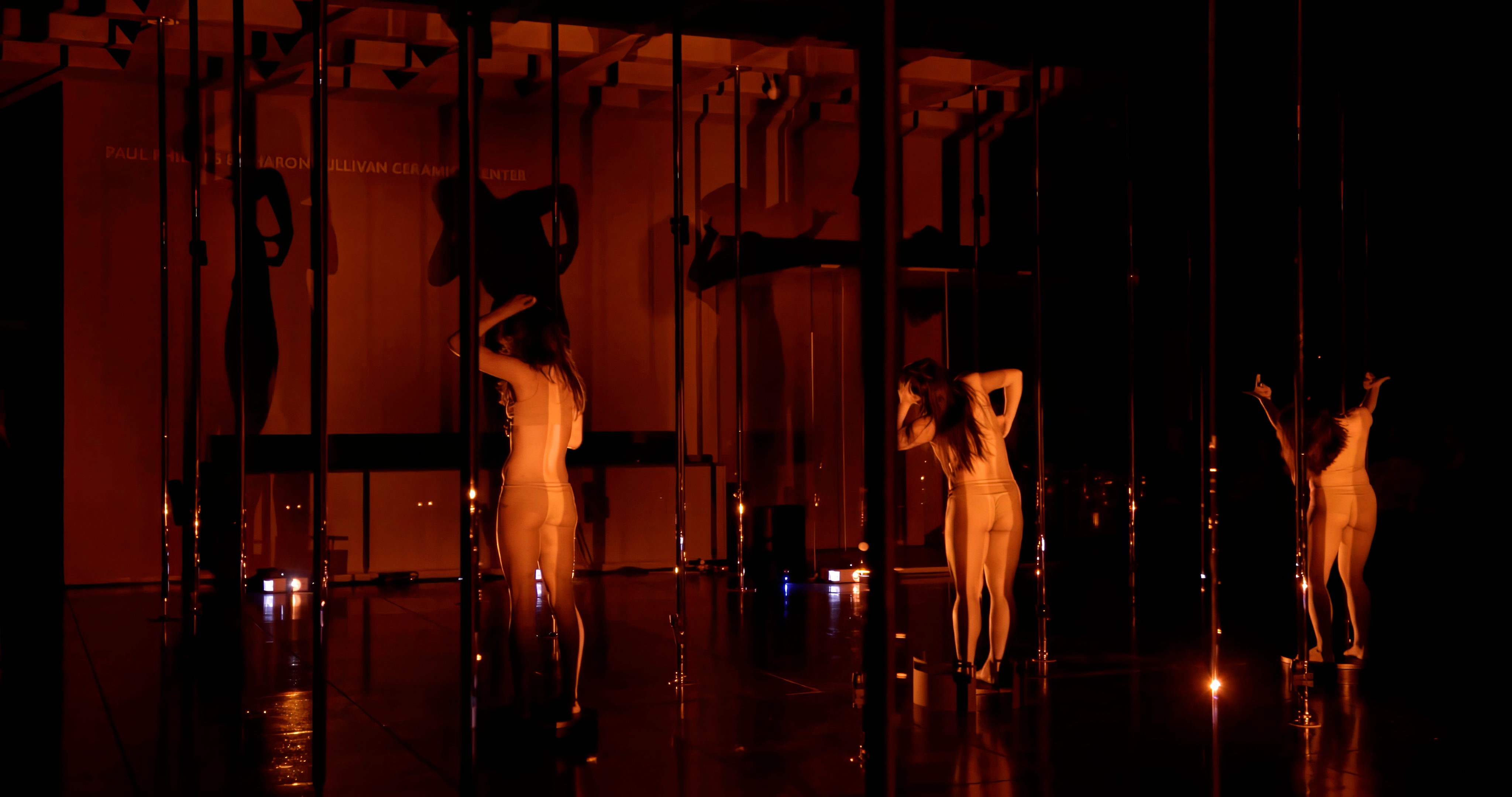
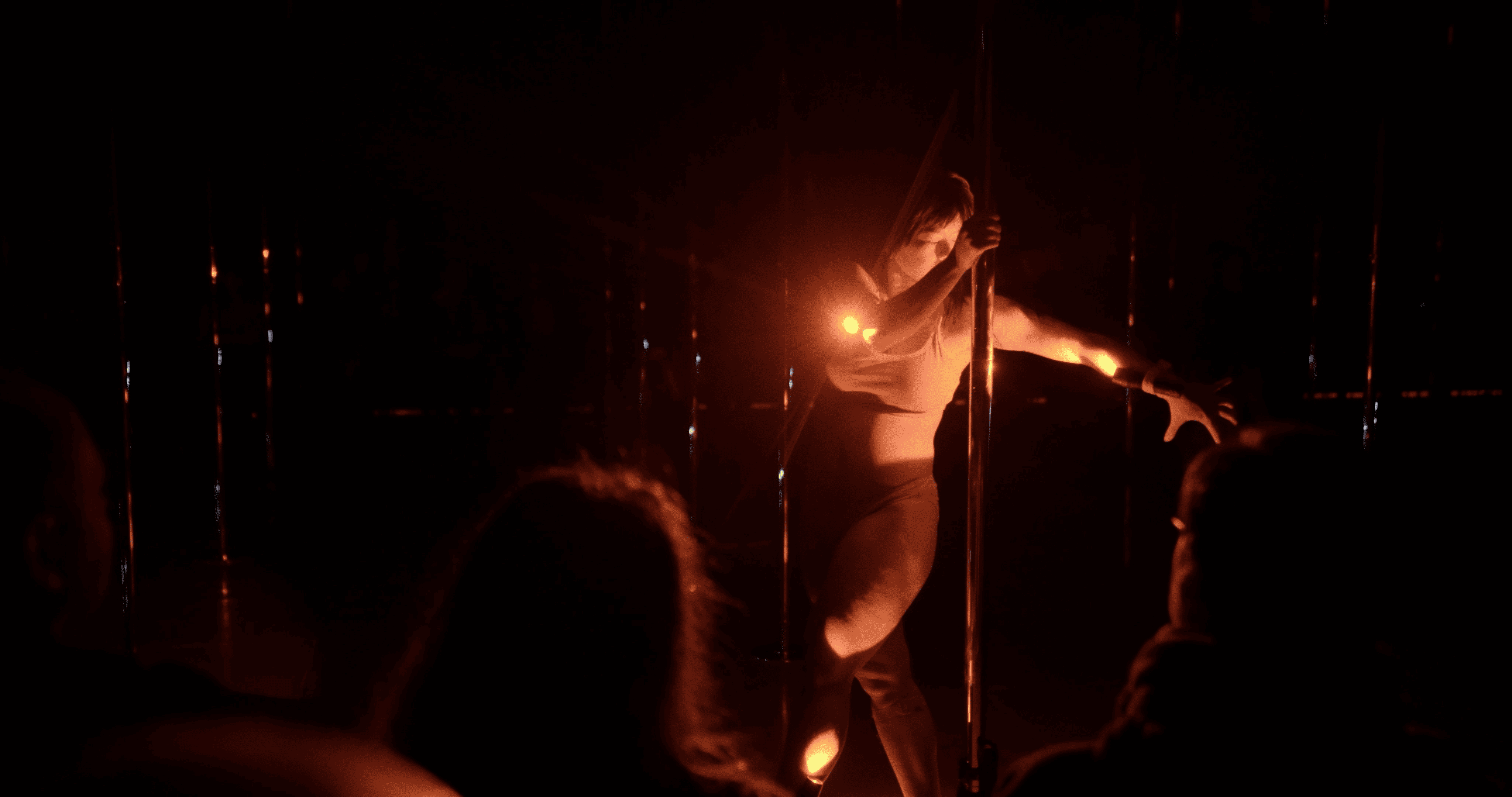
Flashlights are attached to the dancer's bodies, allowing light to move with them and expand into the surrounding space. The illumination extends outward, almost wrapping around the audience, creating a fully immersive moment in which light and performance become inseparable.
Chapter 06: Relapse
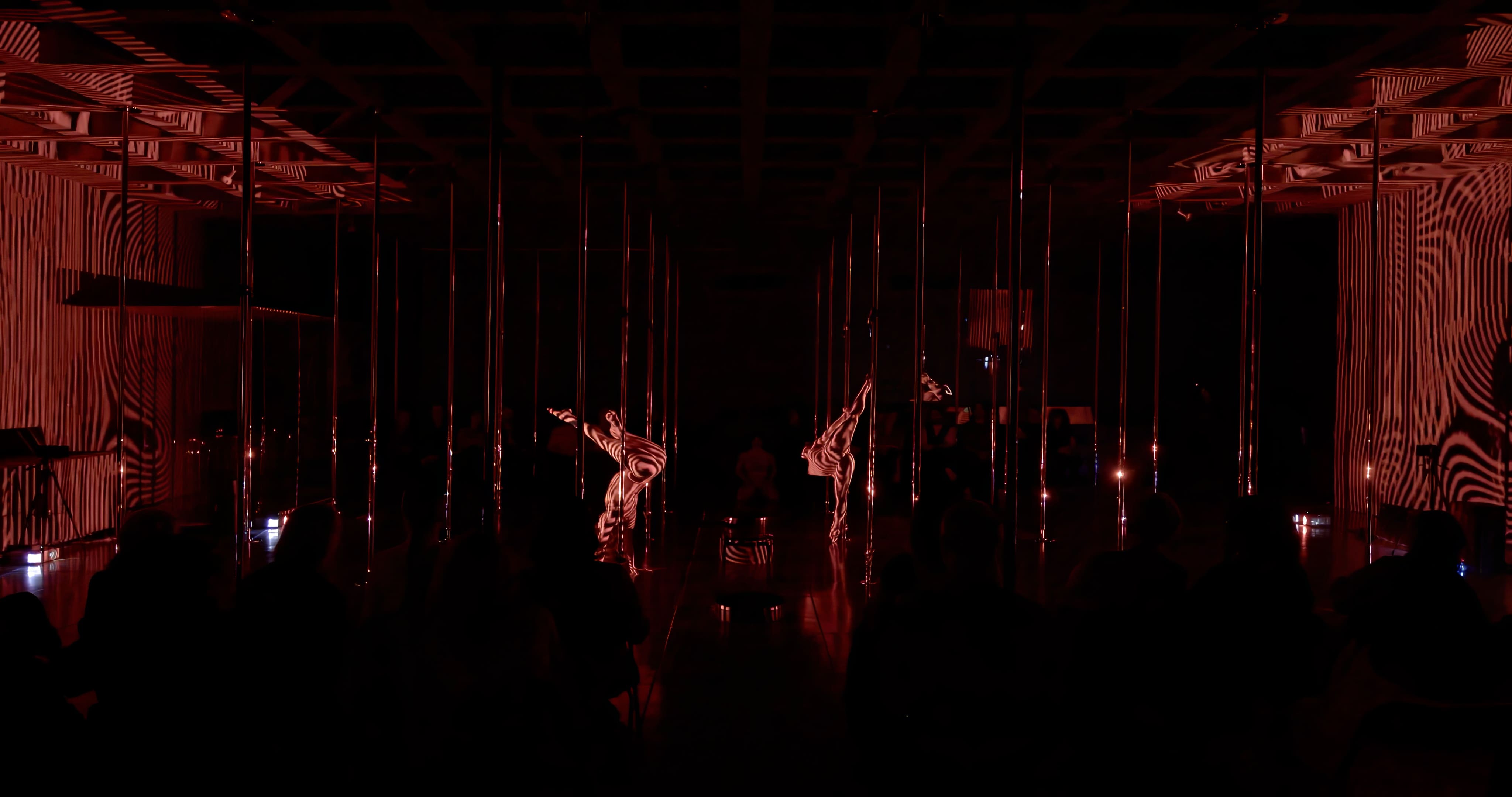
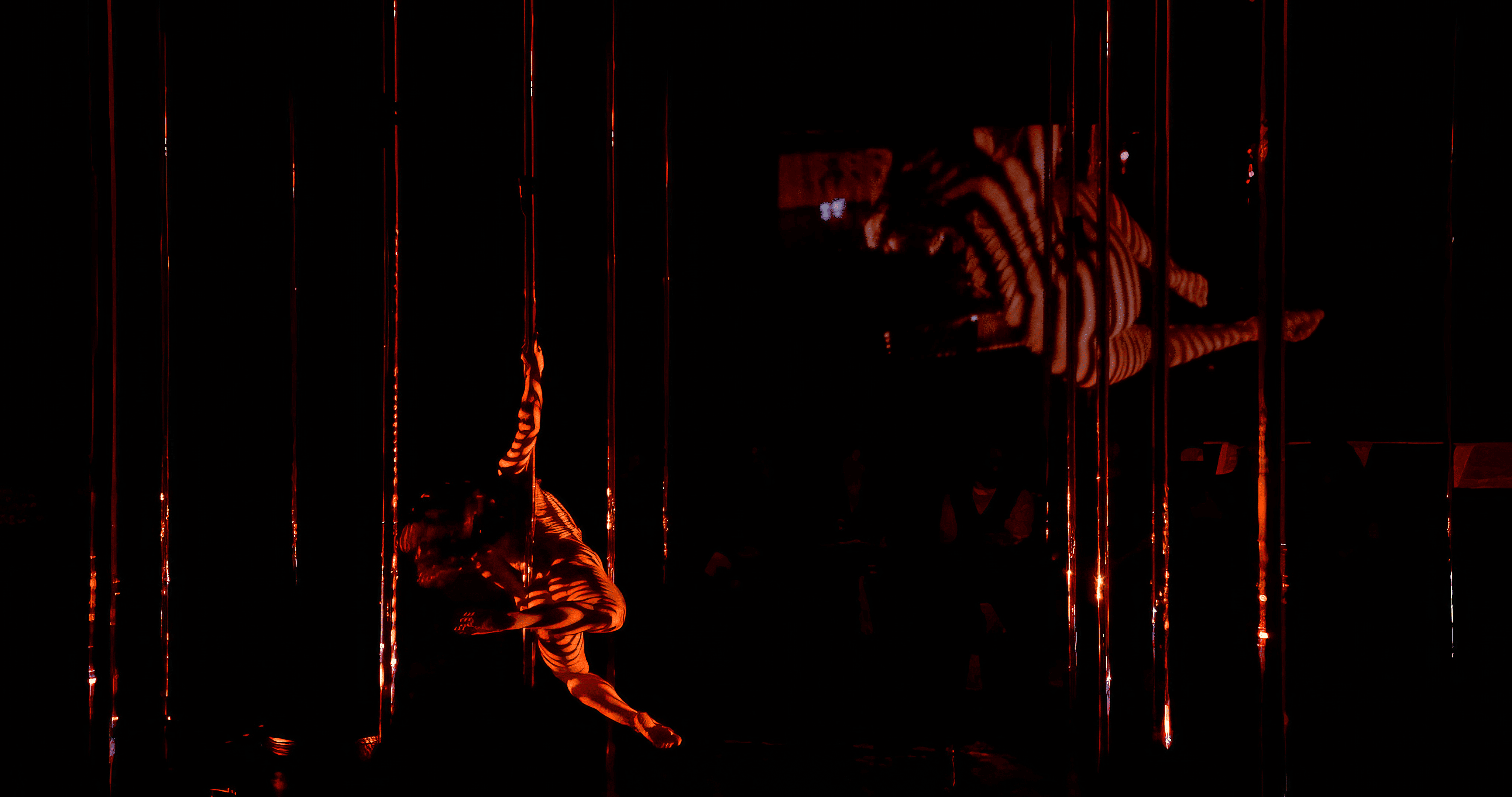
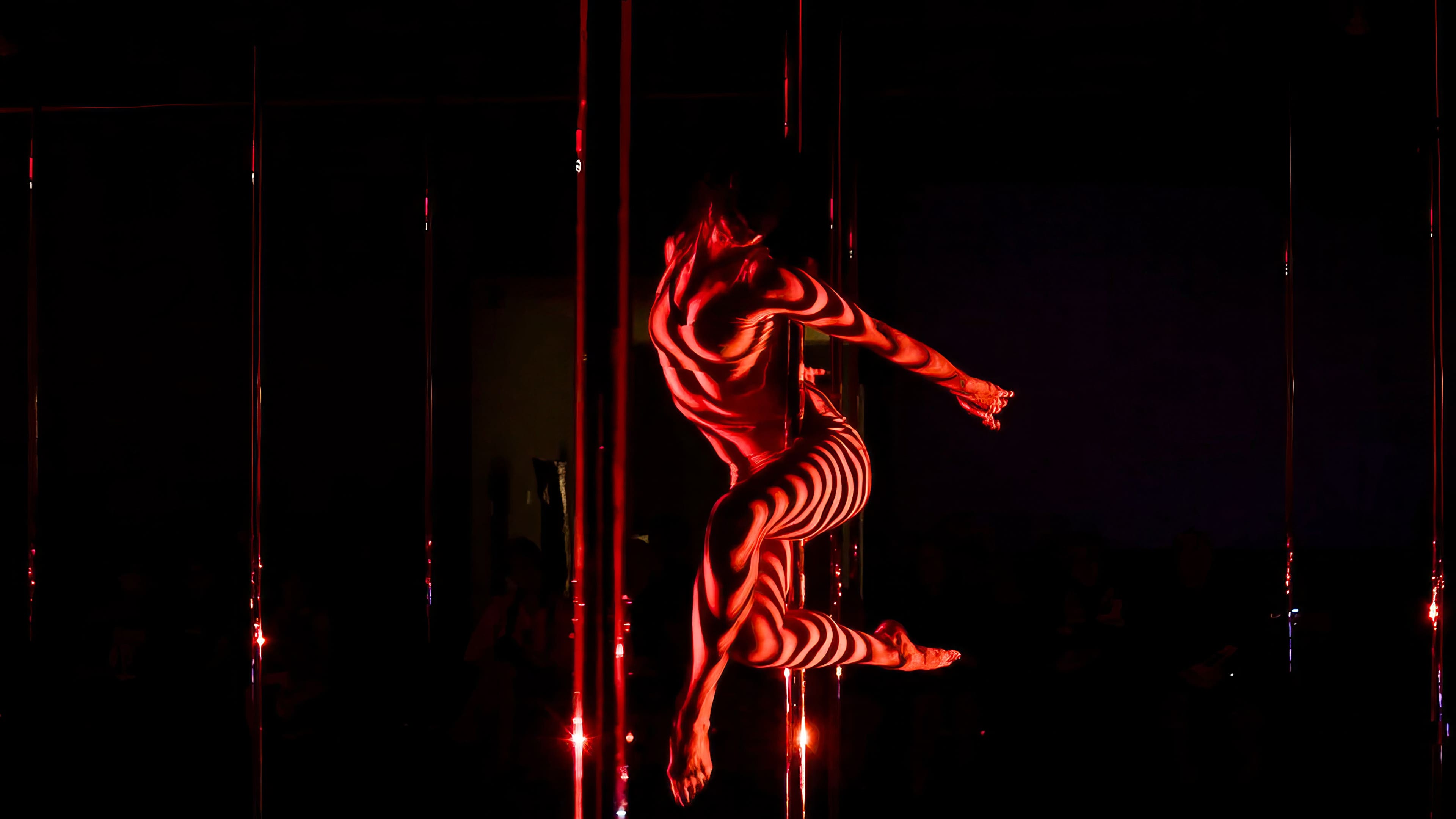
The atmosphere softens once again. Simple projected patterns and layered real and pre-recorded images create an overlap between past and present, reality and memory. It suggests that healing is not linear, but cyclical.
Chapter 07: Return to Pulse
The performance returns to Pulse, marked by the rhythm of a heartbeat, completing the cycle. Rather than unfolding as a linear narrative, it operates as a continuous loop.
Final Performance
Ouroboros, presented by the Everson Museum of Art, Fall 2025
Created for Erin Cuevas’s Boghosian Fellowship at the Syracuse School of Architecture
Director and Scenographer | Erin Cuevas
Director and Choreographer | Vickie Roan
Dancers | Vickie Roan, Angel Mammoliti, Aika Doone
Composer | Kurtis Sprung
Creative Technology | Scott March Smith, Ziqi Wang, Ellee Jeffreys
Producers | Jana Masset Collatz, Zack Matthews, Meng Chih Hsieh, Nicole Hagen
Show Capture and Video| Megan McNally, Alex Cantatore
Additional Support | Yufan Xie, Shimmy Boyle
Special Thanks | Poles generously provided by Xpole, Costumes generously provided by 12twelve